Wild harpies
Ronja, the Robber's DaughterWild harpies are among the fiercest inhabitants of Matt’s Forest, dangerous predators whose pursuit repeatedly tests Ronia’s knowledge of the wilderness and, later, her bond with Birk. Their attacks make clear that the forest is not a human domain: the harpies hunt people, while the children’s survival depends on recognizing the limits of their control and finding refuge within the natural world.
Nature and Place in the Forest
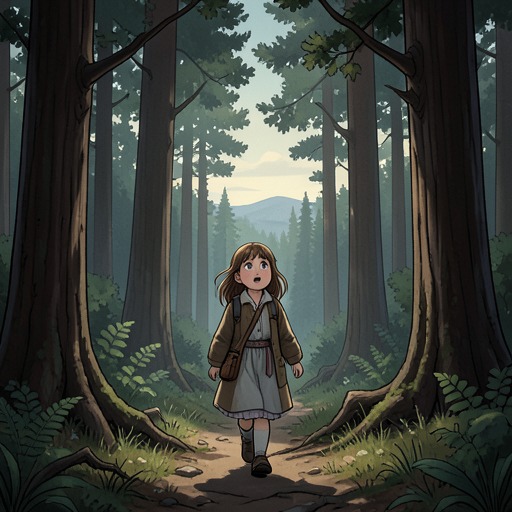
The harpies are beautiful and ferocious, with stony eyes and sharp claws; they search the forest for prey and are described as its most dangerous threat. Matt’s warnings about them help explain why he kept Ronia inside Matt’s Fort for so long. Although Ronia has seen them circling over the woods and initially retreats to hide, she eventually refuses to abandon the paths and places of her solitary forest life merely because they are there.
Their danger changes with the seasons. In autumn they become especially fierce, and their pursuit of Ronia grows into a sustained hunt. They can fly over the woods and follow a person through familiar terrain, so speed and knowledge of hiding places do not guarantee safety. Ronia can run like a fox and knows the forest’s refuges, but the harpies keep after her until she must dive into a pool, swim underwater, and hide beneath a thick fir tree while they search nearby.
The harpies share the forest with animals and other beings, rather than possessing it. Birk insists that the woods belong to all its inhabitants, listing foxes, wolves, bears, elk, wild horses, birds, snails, spiders, and ants before adding the harpies, gray dwarfs, rumphobs, and murktrolls. Ronia knows those other inhabitants, but the harpies remain the ones she hates most. The distinction between belonging to the woods and being safe from its dangers is central: the forest is shared, yet its inhabitants can threaten one another.
Threats to Ronia
The harpies’ first major pursuit of Ronia in autumn establishes their characteristic method: they chase and taunt before they strike. Ronia hears them call after her and threaten that blood will run, but escapes by diving into a pool and hiding beneath a fir tree. The episode shows both her vulnerability and her resourcefulness. She cannot confront the flock, but she uses the water and concealment to break their pursuit.
On another occasion, the danger becomes more immediate when a harpy descends from beneath the dark clouds and lands beside Ronia. She closes her eyes, convinced that nothing can save her, while the harpy pulls at her hair and threatens to make her work in the mountains or attack her. Ronia had been shouting into the empty woods, with no one there to hear; the arrival of the harpy turns that isolation into direct peril. This encounter underscores that the forest’s inhabitants can be near even when Ronia has no human help at hand.
The threat also shapes the children’s later habits. While living at Bear’s Cave, Ronia and Birk note that the harpies have left them undisturbed for a long time. Birk attributes this partly to the harpies’ mountain caves being on the far side of the forest, away from the river, and suggests the gray dwarfs may also have kept quiet. Ronia is wary even of speaking about the harpies, fearing that mention might bring them near. Their temporary safety is therefore conditional, not a victory over the danger.
The River Attack and Escape
That respite ends when a large flock appears above the river while Ronia and Birk are bathing. The harpies hover, screech, and threaten the children in the water. Birk calls for Ronia to dive, and they swim underwater until they need air. When they surface to see the sky darkened by more harpies, they believe escape is impossible. Ronia bitterly thinks that the attackers will spare her the worry of winter, a thought that registers how close she believes death has come.
The harpies prolong the threat rather than immediately attacking. They enjoy frightening and tormenting their prey while the flock’s great harpy circles above the river, waiting to give the signal to strike. From her position overhead, the leader watches for the two children to reappear. Ronia searches for Birk and fears he has drowned or left her, but hears his call and sees him clinging to a fallen birch with green leaves still on its upper branches.
The birch becomes their means of escape. Ronia swims to Birk before the current carries him beyond reach, and he pulls her beside him. Together they cling beneath the leafy branches, which conceal them from the harpies above. The flock searches the river, unable to see what the tree hides, and circles in frustration. Meanwhile the current carries the children toward Greedy Falls; they have escaped the attackers, but their concealment has taken them into a new danger.
Limits of the Harpies’ Power
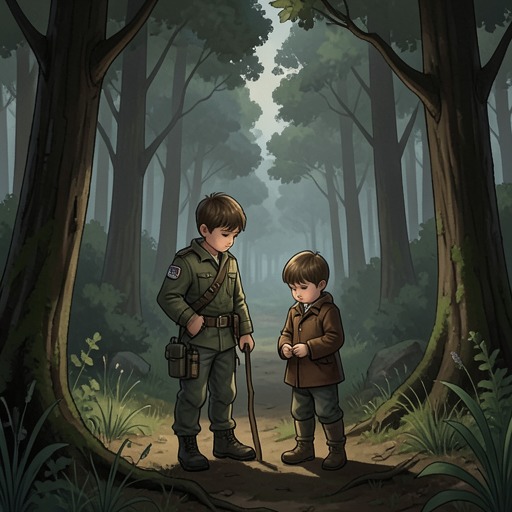
The river episode shows that the harpies’ predation is directed at human beings rather than every creature in the forest. During an earlier chase, Ronia and Birk are riding when a harpy pursues them. The horses panic and become impossible to control, so the children jump down and let them run. Once the horses are riderless, they have nothing to fear from the harpy: it is the human riders she wants. This distinction gives the children a practical chance to escape, but does not make the pursuit harmless; they must leave their mounts behind and scatter in opposite directions.
The harpy cannot catch both children at once. As she pursues Birk, Ronia finds a hiding place; when the harpy briefly turns her attention toward Ronia, Birk crawls between two large boulders. The harpy searches furiously, but, unable to see either child, she eventually flies back to the mountains. The scene contrasts the harpies’ physical strength and aerial advantage with a limitation in how they search: concealment can defeat their attention, even when it cannot overpower them.
The harpies’ recurring attacks also sharpen the book’s account of coexistence in the wilderness. Ronia and Birk do not claim that every creature is gentle or that humans can command the woods. They learn instead to observe where danger comes from, to avoid provoking a pursuit, and to use the forest’s features without treating its inhabitants as possessions. The harpies remain frightening and hostile, but their presence reinforces that the woods are shared territory, not a refuge reserved for people.
Narrative Role
From the storm surrounding Ronia’s birth to the flock above the river, the harpies recur at moments when safety is uncertain. On the night Ronia is born, they circle Matt’s Fort in the storm and disturb Lovis as she gives birth and sings. Matt shoots arrows through a loophole and shouts at them to leave, but they jeer that the newborn will be a thunder-and-lightning child before flying away. Their introduction thus connects Ronia’s life to the unruly wilderness from its first night, while making clear that even Matt cannot simply command them away.
Later, they turn that ominous presence into a test of Ronia’s independence, then of the children’s shared resourcefulness. Ronia’s evasions rely on her knowledge of paths, pools, and hiding places; in the river attack, survival depends on Birk’s call, the drifting birch, and their ability to shelter together beneath its branches. The harpies do not disappear from the forest, and the children do not defeat them. They escape by reading the world around them and acting within its limits.